
Gumline Cavities: How To Spot, Treat, and Prevent Them
Gumline cavities are more common than most people realize — especially in adults. You might brush every day and still notice sensitivity when you drink something cold or see a small dark line forming where your tooth meets your gums, even though you think you have exceptional oral hygiene habits. That vulnerable spot can be harder to clean, which makes decay sneak in quietly and cause irritation, bleeding, or discomfort before you even realize there’s a problem.
The good news? Cavities near the gumline are highly treatable when caught early. With proper dental care and a few daily habits, you can stop decay in its tracks and protect your teeth and gums from future damage.
We’ll break down exactly what a gumline cavity is, why it forms in such a vulnerable spot, how dentists treat it, and what you can do at home to prevent it from coming back.
Table of Contents
- What Is a Gumline Cavity?
- Common Causes of Gumline Cavities
- 3 Signs You Might Have a Gumline Cavity
- Why Early Detection Matters
- Gumline Cavity Treatment Options
- Preventing Future Gumline Cavities
- Frequently Asked Questions About Gumline Cavities
- Think You Might Have a Gumline Cavity? Schedule a Check-Up at Mint Dental Works
What Is a Gumline Cavity?
Cavities on the gumline occur where the tooth meets the gums, typically in areas exposed by gum recession. As the gums pull away from your teeth, the tooth’s root surface — less protected than enamel — becomes vulnerable to decay. Plaque buildup can then erode the tooth structure, leading to sensitivity, discomfort, and visible dark spots along the gumline.
These cavities are increasingly common with age, but they can affect patients of all ages. Without early treatment, decay progresses, leading to deeper holes in the tooth, persistent bad breath, and noticeable discoloration.
If you experience sensitivity to hot or cold foods, pain near the gums, or visible changes in this area, we can evaluate the gumline cavity at Mint Dental Works and recommend timely, effective treatment options.

Common Causes of Gumline Cavities
Gumline cavities form when plaque and bacteria accumulate where the tooth meets the gums. The space where the two meet can be harder to reach with daily brushing, leaving it susceptible to cavities.
Several controllable and age-related factors increase the risk of gumline cavities:
- Gum recession: As gums recede — whether from aging, periodontal disease, or aggressive brushing — the tooth root becomes exposed. Unlike enamel, the root surface is softer and lacks the same protective mineral content, making it easier for decay to develop.
- Plaque and tartar buildup: Plaque constantly forms along the gumline. If it isn’t removed properly through brushing and flossing, it hardens into tartar, creating an ideal environment for bacteria to attack the tooth structure.
- Dry mouth (xerostomia): Saliva is critical for flushing bacteria from the mouth and neutralizing acids. Medications, medical conditions, or dehydration can lead to dry mouth, making it an environment where bacteria and acids flourish and gumline cavities are more likely.
- Diet high in sugars and acids: Sugary snacks and acidic drinks fuel the bacteria that weaken enamel. Frequent snacking also prolongs the amount of time teeth are exposed to cavity-causing sugar and acid attacks.
- Teeth positioning or crowding: Crooked or crowded teeth create tight spaces that toothbrushes can’t reach well, thereby increasing plaque retention and gum disease. Gumline cavities in molars are especially common.
- Poor oral hygiene habits: Rushed brushing, neglecting flossing, or using a worn-out toothbrush can leave food debris and bacteria in the hardest-to-reach areas, especially at the gumline or between teeth.
At Mint Dental Works, we prioritize preventive care, gentle but thorough cleanings, and personalized guidance to help you maintain healthy gums and teeth at every stage of life to combat the frequent culprits of gumline cavities.
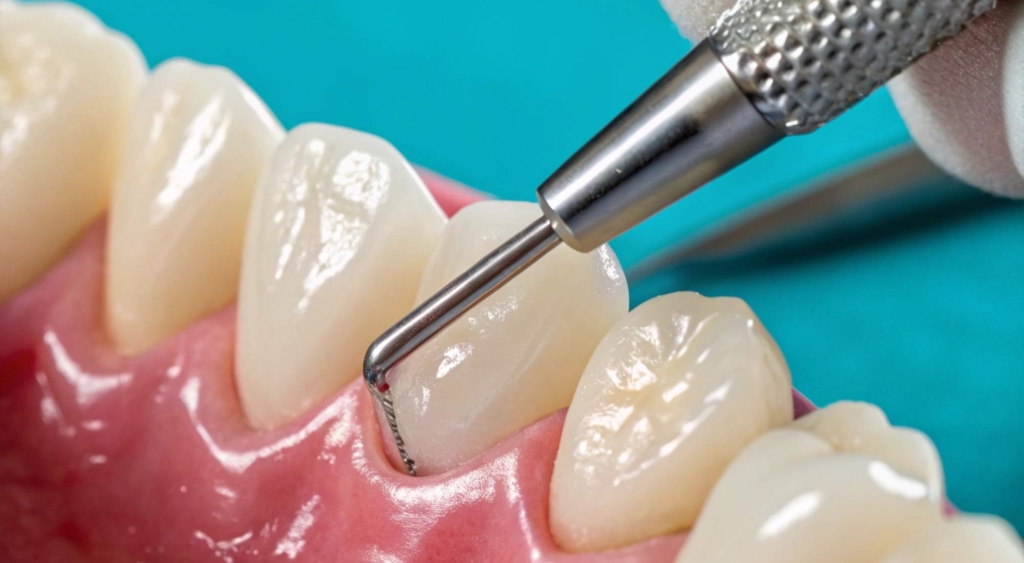
3 Signs You Might Have a Gumline Cavity
A gumline cavity can start small and be easy to miss, but early symptoms often give you clues before the decay becomes serious. Paying attention to changes along the gumline can help you catch the issue quickly before it becomes a serious problem.
#1: Sensitivity to Hot or Cold
One of the earliest signs of a gumline cavity is a sharp or lingering sensitivity when eating or drinking something hot or cold. Because the cavity often forms along the exposed root surface, temperature changes can reach the inner layers of the tooth more quickly. If that sensitivity becomes more frequent or doesn’t go away after you finish eating, it’s a strong indication that decay is present and should be evaluated by your dentist.
#2: Visible Discoloration or a Dark Line Near the Gum
Gumline cavities may appear as a faint brown or black line where the bottom of the tooth meets the gums. In some cases, there may be small notches or pits that are easy to miss without a close look. Any noticeable change in the color or structure of this area may indicate decay. If you spot discoloration that wasn’t there before, a dental exam can confirm whether a gumline cavity is forming and prevent further tooth damage.
#3: Tenderness or Mild Pain While Brushing
Pain or irritation while brushing along the gumline is another red flag. When decay weakens the tooth surface near the gums, even gentle brushing can trigger discomfort. This tenderness may also be accompanied by slight bleeding or gum inflammation, which can lead people to avoid properly brushing the area, further accelerating the problem. If brushing consistently causes discomfort in a certain area, it’s time to have that tooth checked professionally.

Why Early Detection Matters
Catching a gumline cavity early can make the difference between a simple restoration and a more serious dental complication. Since these cavities form near or directly on the tooth’s root surface, decay can progress quickly. Once the root is affected, the tooth’s structure becomes weaker, leaving it more vulnerable to fractures, advanced decay, or infection.
In severe cases, untreated gumline cavities can lead to root canal treatment or tooth loss — outcomes most people don’t expect from what starts as a small dark spot near the gums.
Early detection ensures treatment happens before decay spreads deeper, helping preserve the natural tooth and protecting the surrounding gum tissue. At Mint Dental Works, our team focuses on identifying gumline cavities in their earliest stages through thorough exams and gentle preventive care. If you’ve noticed sensitivity or changes near the gumline, scheduling a visit now can help you avoid more complex issues later.
Gumline Cavity Treatment Options
When a gumline cavity is detected, timely treatment is key to protecting the tooth and preventing deeper damage. Modern dentistry offers a range of effective options designed to restore strength, relieve sensitivity, and address the underlying cause of decay.
Modern Filling Materials and Techniques
Today’s dental treatments make repairing a gumline cavity both effective and visually seamless. Dentists often use composite resin fillings — materials that match the natural shade of your tooth. These gumline cavity fillings bond directly to the tooth structure, allowing for precise shaping along the gumline without compromising nearby tissues.
The result is a strong, discreet restoration that protects the tooth while maintaining the natural appearance of your smile.
Addressing Underlying Issues
Successful gumline cavity treatment doesn’t stop with the filling itself. Because many cavities in this area stem from gum recession or plaque buildup, we can recommend interventions to protect the exposed root surface in the long term, supporting your diet and lifestyle.
Preventing Future Gumline Cavities
At Mint Dental Works, we know how important it is to protect the vulnerable area where the tooth meets the gums.
Some of the preventive measures you can take to support your oral hygiene include:
- Brushing gently twice a day with a soft-bristle toothbrush to effectively remove plaque without contributing to gum recession or surface wear.
- Flossing every day and using fluoride-enriched toothpaste to strengthen root surfaces and prevent bacterial buildup along the gumline.
- Scheduling routine cleanings and comprehensive exams at Mint Dental Works to monitor gum health, detect early signs of decay, and receive personalized care.
- Following a balanced diet that limits sugary and acidic foods and beverages to reduce enamel erosion and minimize the environment that promotes cavity-causing bacteria.
Keeping these habits in your daily routine significantly lowers your risk of future gumline decay and helps preserve your natural smile. We’re here to guide you with care and recommendations to help keep gumline cavities at bay.

Frequently Asked Questions About Gumline Cavities
Are Gumline Cavities Serious?
Yes. We can’t stress how important it is to take gumline cavities seriously. Gumline cavities can progress quickly because the root surface is more vulnerable than enamel. Without treatment, decay can lead to infection, nerve damage, or tooth loss.
Early care helps prevent more complex procedures, such as root canals or extractions, which is why we recommend routine checkups and early intervention.
What Does a Gumline Cavity Look Like?
When you’re looking at your teeth and gums, keep an eye out for a small brown or black line, spot, or notch where the tooth meets the gums. Some of these spots may appear as tiny fissures or areas of roughness you can feel with your tongue.
These discolorations can sometimes be accompanied by sensitivity or gum irritation.
Can a Cavity at the Gumline Be Fixed?
Yes. We can repair cavities at the gumline with composite fillings and treat underlying issues, such as gum recession, to prevent decay from returning. We can also use fluoride treatments, sealants, gum treatment, or periodontal therapy or grafting to repair and prevent gumline cavities.
Addressing the problem early can preserve more natural tooth structure and avoid further discomfort, so schedule your checkup as soon as you think you may have a gumline cavity.
Are Gumline Cavities Common in Adults?
Gumline cavities are especially common in adults because gum recession naturally increases with age. As the gums pull back — even slightly — the softer root surface becomes exposed and more susceptible to decay. Research indicates that 91% of adults had areas of damage caused by bacteria.
Think You Might Have a Gumline Cavity? Schedule a Check-Up at Mint Dental Works
If you’re noticing sensitivity or changes along your gumline, the time to schedule a checkup is now. As a trusted SE Portland dentist, Mint Dental Works provides thorough exams and preventive care to stop decay early and protect your smile.
Reach out today to book your visit and keep your teeth and gums healthy for the long run.